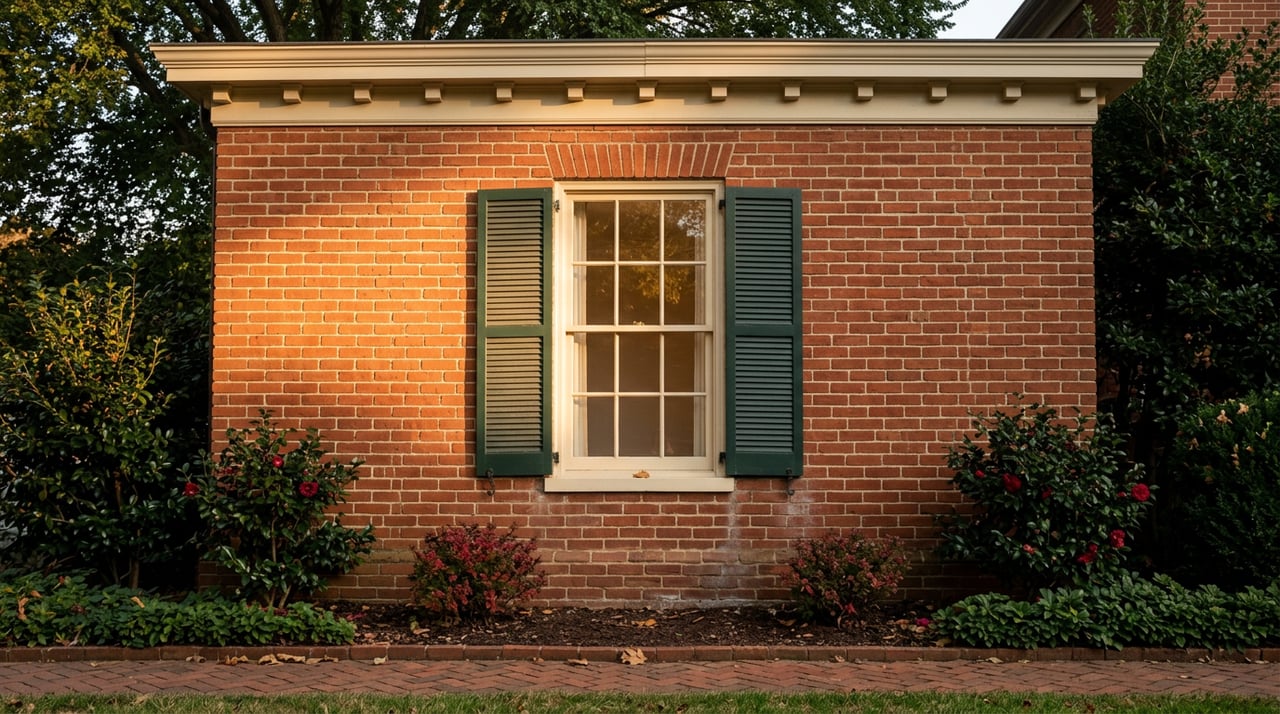
What Buying Into A Charlottesville Historic District Really Means For Your Renovation Timeline
August 27, 2026
August 27, 2026
Is a historic district the wrong place to buy if you plan to renovate? Ask that question in Charlottesville and you'll get two different answers depending on who you ask and when they last talked to the city's Board of Architectural Review. The honest answer is neither yes nor no. It depends entirely on whether you treat the review process as step one or as an afterthought, and the gap between those two approaches is the difference between a project that clears in a single meeting and one that stalls for months after the contractor has already been paid.
Charlottesville currently maintains eight Architectural Design Control districts: Downtown, North Downtown, Ridge Street, West Main Street, The Corner, Wertland Street, Oakhurst-Gildersleeve, and Rugby Road-University Circle-Venable. Layered on top of those are separate, somewhat less restrictive Historic Conservation Districts covering the Martha Jefferson neighborhood, the Rugby Road neighborhood, and Woolen Mills Village, plus roughly 76 individually protected properties scattered across the city. If your future front door sits inside any of those lines, exterior work triggers a Certificate of Appropriateness from the BAR before you touch a hammer. That single requirement shapes a large share of the housing stock buyers consider when they're weighing walkability against a rehab budget.
Charlottesville real estate hasn't been forgiving of hesitation lately. Median sale price across the Charlottesville area sat near $450,000 in early 2026 according to a report from the Charlottesville Area Association of Realtors, with fewer sales and homes lingering slightly longer than the frantic pace of the prior year. CAAR's 2026 president, Amanda Spigone, described the shift as a normalizing market rather than a downturn, noting that buyers finally have a bit more room to breathe. That room matters here specifically because a slower market gives you time to do the one thing rushed buyers skip: find out before you write an offer whether the house you love sits inside a design control district, and if it does, what that means for the renovation you're already picturing.
The practical difference between owning inside and outside one of these eight districts comes down to who signs off on your porch railing, your window replacements, your paint color, and your addition. Outside the lines, that's you and your contractor. Inside them, it's also a nine-member citizen board that meets the third Tuesday of each month in City Council Chambers.
The board isn't reviewing your granite countertops or your kitchen layout. Its authority stops at the building's exterior and site: massing, materials, height, window patterns, additions, and demolition. Paint color and small signage changes are often handled administratively by city staff rather than the full board, which speeds up the parts of a renovation buyers worry about most.
City code frames the purpose of an optional pre-application conference plainly: its objective is to simplify and expedite the formal review that follows. That's not marketing language. It's the actual text of the ordinance, and it points to the single decision that separates an easy historic district renovation from a painful one.
Buyers tend to assume the worst case applies to everything, or the opposite, that a light cosmetic refresh flies under the radar entirely. Neither assumption holds up well in practice.
| Type of work | Review path |
|---|---|
| New construction, additions, demolition | Full BAR review and Certificate of Appropriateness |
| Window, door, roofing, or siding changes visible from the street | Full BAR review, often resolved in one meeting for straightforward projects |
| Paint color, minor signage | Administrative review by city staff, no BAR meeting required |
| Interior renovations with no exterior change | No historic district review required |
| Work on individually protected properties, including interior demolition in some cases | Full BAR review regardless of ADC district boundaries |
The distinction that catches people off guard is the last row. A property doesn't have to sit inside one of the eight named districts to fall under BAR jurisdiction. Individually protected properties carry that designation on their own, which means a title search and a conversation about the property's history are worth doing before you assume a renovation will be simple just because the address isn't inside a mapped district.
Two projects that have come before the BAR in the past year illustrate the gap between doing this well and doing it badly.
In February 2026, the board held a preliminary look at a nine-townhome proposal for a 0.47-acre parcel at 528 Valley Road, purchased in September 2023 for $868,000 and sitting inside the Oakhurst-Gildersleeve ADC district. Because the site is by-right under current zoning, the BAR's sign-off is the only real hurdle standing between the buyer and a shovel, and the developer used the pre-application conference exactly as the ordinance intends: to surface concerns before drawings were finalized rather than after.
Compare that with a far smaller project at 310 4th Street NE in the North Downtown ADC district, where an owner sought approval for a new roof over an existing patio. The application went before the board on August 19, 2025, and passed 9 to 0 in a single meeting. No redesign, no continuance, no drama. The difference between that outcome and a monthslong back-and-forth usually isn't the size of the project. It's whether the applicant showed up with a complete application, photographs of the property and its neighbors, and materials that matched the district's design guidelines from the start.
The mechanics worth knowing before you're the one filing: a complete Certificate of Appropriateness application must be submitted at least 21 days before the BAR meeting where it will be considered, and once granted, the certificate stays valid for 18 months, with a possible one-year extension for reasonable cause. That's a workable runway for most single-family renovations if you build it into your closing timeline instead of discovering it after signing a contract with a builder who assumed a standard permit process.
Here's the part of this equation that rarely makes it into a buyer's spreadsheet. Virginia's historic rehabilitation tax credit returns 25 percent of eligible rehabilitation expenses to owners of certified historic structures, including owner-occupied residences, and that credit can be carried forward for up to ten years if you can't use all of it in a single tax year. To qualify, your eligible spending has to reach at least 25 percent of the home's assessed value from the year before work began, excluding land value, and the work itself has to follow the Secretary of the Interior's Standards for Rehabilitation.
Run the math on a $200,000 renovation and the state credit alone is worth up to $50,000 back against your Virginia tax liability. That number changes how the BAR review should feel to a buyer. It's not a tax on your renovation. It's the price of admission to a credit that most buyers of non-historic homes simply don't have access to at all.
Does living outside the eight named ADC districts mean I'm free of any exterior review? Not necessarily. Individually protected properties and, in some cases, properties along designated entrance corridors carry their own review requirements independent of the district maps. Confirm a property's status before assuming freedom from BAR oversight.
How fast can a straightforward project actually move through the BAR? The board meets monthly, and a complete, well-documented application for a modest project, like the 310 4th Street NE roof, can clear in a single meeting. Complex new construction or additions involving individually protected properties tend to take longer and sometimes return for multiple sessions.
Can I use the state tax credit if I plan to rent the home out instead of living in it? The 25 percent owner-occupied threshold applies specifically to primary residences. Income-producing properties fall under a different spending threshold, 50 percent of assessed value rather than 25 percent, and may also qualify for an additional 20 percent federal credit that isn't available to owner-occupants.
If you're weighing a home inside one of Charlottesville's historic districts against a comparable property outside the lines, the review process shouldn't be the deciding factor on its own. It should be one line item in a much longer conversation about budget, timeline, and what the house is actually worth to you once the work is done. Gavin Sherwood has walked local buyers through that exact conversation, from the first pre-application conference to the closing table. Schedule a consultation and bring your questions about the specific address you're considering. That's a much better use of an afternoon than guessing.
Contact Gavin today to learn more about his unique approach to real estate and how he can help you get the results you deserve.
969 2nd St SE Charlottesville VA 22902